Obligate carnivores
Cats are designed for high protein and moisture, not carbohydrates. Moving to a recipe with 74 to 77% moisture and a high proportion of named animal ingredients is a significant nutritional shift, even when it is the right one.

Desktop module ↓
Cats adapt at different paces. Wundercat offers four schedules so you can match the transition to your cat's age and history. Choose the one that fits, then follow the day-by-day plan.
13 days
16 to 20 days
18 to 20 days
24 days
The Appetite Rule
Appetite is always the priority. If your cat's intake drops by more than 20%, hold the current ratio for two to three extra days before advancing. If intake drops below 60% of normal, switch to the next slower schedule and contact us. WhatsApp +971 50 229 8869.
| Days | Old Food | New Food | What to Watch For |
|---|---|---|---|
| Days 1 to 3 |
|
Minimal digestive change expected. Your cat may sniff the bowl for longer than usual. Total appetite should remain stable. Mild stool softening can occur but stools should remain formed. | |
| Days 4 to 6 |
|
Early microbiome adjustment begins. Some cats eat more slowly due to the new texture. A slight stool odour change or mild softening is normal. Ensure total caloric intake stays consistent. | |
| Days 7 to 9 |
|
The biggest digestive adaptation phase. Monitor for repeated vomiting, which is not normal. Stool should remain formed. Mild softness is acceptable for 24 to 48 hours only. Appetite must stay stable. | |
| Days 10 to 12 |
|
Most cats show stable digestion by now. Stool volume may slightly decrease due to higher digestibility. Water drinking often decreases as the food provides natural moisture. Energy levels should be normal. | |
| Day 13+ |
|
Fully transitioned. Continue monitoring appetite, body weight, and stool consistency for the next two weeks. Schedule a weight check at weeks two to four to confirm appropriate intake. |
If your cat hesitates at any phase, hold the current ratio for two to three extra days before advancing.
| Days | Old Food | New Food | What to Watch For |
|---|---|---|---|
| Days 1 to 4 |
|
Split daily portion across 3 to 4 small meals. Watch for steady appetite at each meal. Energy levels should remain bright. | |
| Days 5 to 8 |
|
Microbiome adjustment begins. Stool softening for 24 to 48 hours is normal. Continue weighing weekly to confirm growth is on track. | |
| Days 9 to 13 |
|
The biggest digestive adaptation phase. Hold this ratio for the full five days. Watch for any drop in playfulness or appetite. | |
| Days 14 to 17 |
|
Most kittens show stable digestion by now. Maintain 3 to 4 small meals to match small stomach capacity. | |
| Day 18+ |
|
Fully transitioned. Continue 3 to 4 meals daily until 12 months. Weigh weekly through the first year to confirm steady growth. |
Kittens have small stomachs and high energy needs. Split each day's portion across 3 to 4 meals. Weigh weekly to confirm steady growth. If your kitten shows any hesitation, extend the current phase by 1 to 2 days before advancing. The full transition can take up to 20 days.
| Days | Old Food | New Food | What to Watch For |
|---|---|---|---|
| Days 1 to 3 |
|
A slow, careful start. Observe appetite and energy at each meal. Minor stool softening is normal. | |
| Days 4 to 7 |
|
Watch for any reluctance at the bowl. Senior cats can take longer to evaluate new aromas. Patience is essential. | |
| Days 8 to 11 |
|
Intermediate phase. Hold for the full four days. Monitor stool consistency and energy. | |
| Days 12 to 15 |
|
The biggest digestive shift. Hold for the full four days. Mild stool softness for 24 to 48 hours is acceptable. | |
| Days 16 to 18 |
|
Most seniors show stable digestion by now. Continue monitoring appetite carefully. | |
| Day 19+ |
|
Fully transitioned. Senior cats benefit from continued weekly monitoring of appetite, weight, and energy. |
If your senior cat shows any hesitation, extend the current phase by 1 to 2 days before advancing. The full transition can take up to 20 days.
| Days | Old Food | New Food | What to Watch For |
|---|---|---|---|
| Days 1 to 4 |
|
An extremely small introduction. Appetite must stay completely stable. No vomiting acceptable. Contact us if anything changes. | |
| Days 5 to 8 |
|
Mild stool softening for 24 hours may occur. If intake drops below 80%, hold longer before advancing. | |
| Days 9 to 13 |
|
Actively adapting. Monitor stool firmness closely. Any repeated vomiting means pause and contact us. | |
| Days 14 to 18 |
|
Highest adaptation phase. Soft stool acceptable for 48 hours only. Energy must not drop. | |
| Days 19 to 23 |
|
Majority from Wundercat. No persistent vomiting or appetite reduction tolerated at this stage. | |
| Day 24+ |
|
Fully transitioned. Monitor closely for two to four weeks. Weight check and vet review recommended. |
This schedule is for cats requiring extra care. Contact our care team and in-house veterinarian before starting. WhatsApp +971 50 229 8869.
Mobile module ↓
Pick the schedule that fits your cat. The plan below updates instantly.
Standard
13 days
SelectedKitten
16 to 20 days
SelectedGentle
18 to 20 days
SelectedClinical
24 days
SelectedThe Appetite Rule
If your cat's intake drops by more than 20%, hold the current ratio for two to three extra days. If it drops below 60%, switch to the next slower schedule and contact us. WhatsApp +971 50 229 8869.
Days 1 to 3
Minimal digestive change expected. Your cat may sniff the bowl for longer than usual. Total appetite should remain stable. Mild stool softening can occur but stools should remain formed.
Days 4 to 6
Early microbiome adjustment begins. Some cats eat more slowly due to the new texture. A slight stool odour change or mild softening is normal. Ensure total caloric intake stays consistent.
Days 7 to 9
The biggest digestive adaptation phase. Monitor for repeated vomiting, which is not normal. Stool should remain formed. Mild softness is acceptable for 24 to 48 hours only. Appetite must stay stable.
Days 10 to 12
Most cats show stable digestion by now. Stool volume may slightly decrease due to higher digestibility. Water drinking often decreases as the food provides natural moisture. Energy levels should be normal.
Day 13+
Fully transitioned. Continue monitoring appetite, body weight, and stool consistency for the next two weeks. Schedule a weight check at weeks two to four to confirm appropriate intake.
If your cat hesitates at any phase, hold the current ratio for two to three extra days before advancing.
Days 1 to 4
Split daily portion across 3 to 4 small meals. Watch for steady appetite at each meal. Energy levels should remain bright.
Days 5 to 8
Microbiome adjustment begins. Stool softening for 24 to 48 hours is normal. Continue weighing weekly to confirm growth is on track.
Days 9 to 13
The biggest digestive adaptation phase. Hold this ratio for the full five days. Watch for any drop in playfulness or appetite.
Days 14 to 17
Most kittens show stable digestion by now. Maintain 3 to 4 small meals to match small stomach capacity.
Day 18+
Fully transitioned. Continue 3 to 4 meals daily until 12 months. Weigh weekly through the first year to confirm steady growth.
Kittens have small stomachs and high energy needs. Split each day's portion across 3 to 4 meals. If your kitten shows any hesitation, extend the current phase by 1 to 2 days. Full transition can take up to 20 days.
Days 1 to 3
A slow, careful start. Observe appetite and energy at each meal. Minor stool softening is normal.
Days 4 to 7
Watch for any reluctance at the bowl. Senior cats can take longer to evaluate new aromas. Patience is essential.
Days 8 to 11
Intermediate phase. Hold for the full four days. Monitor stool consistency and energy.
Days 12 to 15
The biggest digestive shift. Hold for the full four days. Mild stool softness for 24 to 48 hours is acceptable.
Days 16 to 18
Most seniors show stable digestion by now. Continue monitoring appetite carefully.
Day 19+
Fully transitioned. Senior cats benefit from continued weekly monitoring of appetite, weight, and energy.
If your senior cat shows any hesitation, extend the current phase by 1 to 2 days before advancing. Full transition can take up to 20 days.
Days 1 to 4
An extremely small introduction. Appetite must stay completely stable. No vomiting acceptable. Contact us if anything changes.
Days 5 to 8
Mild stool softening for 24 hours may occur. If intake drops below 80%, hold longer before advancing.
Days 9 to 13
Actively adapting. Monitor stool firmness closely. Any repeated vomiting means pause and contact us.
Days 14 to 18
Highest adaptation phase. Soft stool acceptable for 48 hours only. Energy must not drop.
Days 19 to 23
Majority from Wundercat. No persistent vomiting or appetite reduction tolerated at this stage.
Day 24+
Fully transitioned. Monitor closely for two to four weeks. Weight check and vet review recommended.
This schedule is for cats requiring extra care. Stay in close touch with our care team and veterinary advisor throughout. WhatsApp +971 50 229 8869.

Mix thoroughly. Always combine both foods in one bowl. Cats offered two separate options will often pick one and leave the other.

Serve at right temperature. Aim for 30 to 35°C. Add a splash of warm water or rest the bowl inside a larger bowl of hot tap water for a few minutes. Never microwave.

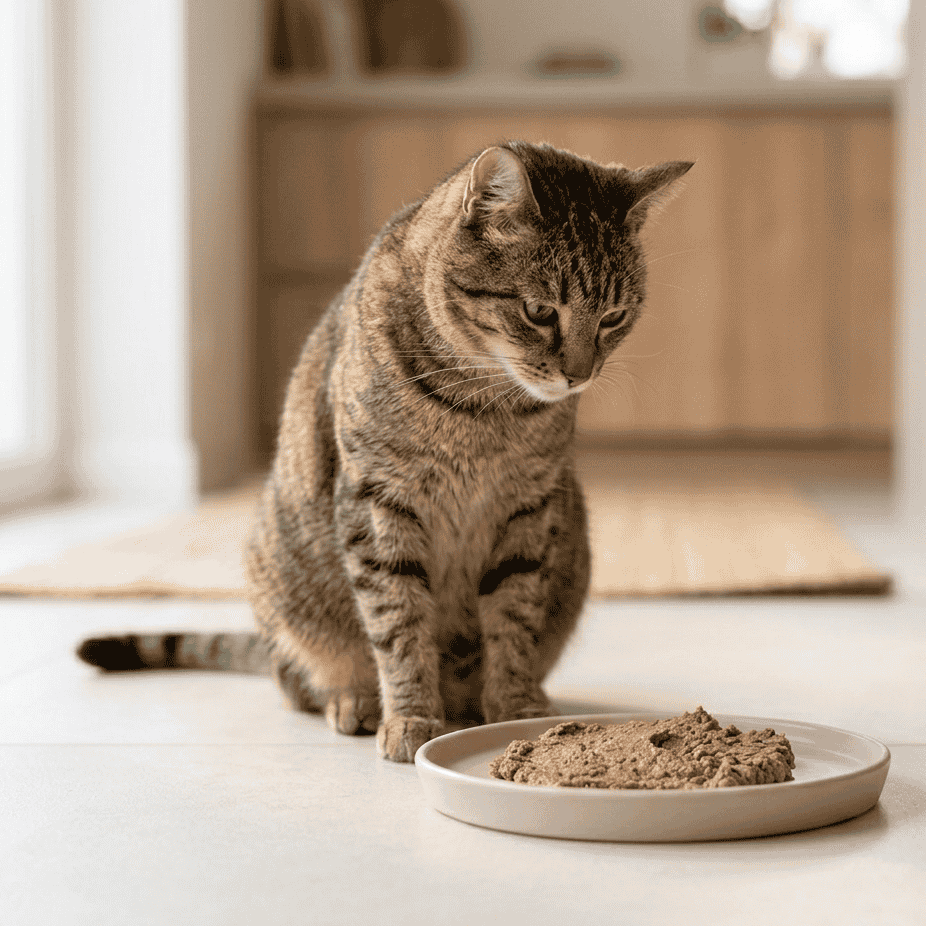
Use a flat, wide bowl. Ceramic or stainless steel. Deep bowls press against the whiskers and cause enough discomfort to put a cat off eating, even when they are hungry.

Play before meals. Three to five minutes of active play before feeding mimics the hunt sequence, primes appetite, and leads to noticeably better engagement at the bowl.

Keep location consistent. Do not move the feeding spot during the transition. Cats treat location as part of their feeding routine and a change alone can trigger refusal.

No new treats. Avoid introducing new treats or supplements during the transition. Keeping all variables constant means you can read appetite signals clearly and accurately.

Maintain total calories. The daily gram amounts should stay consistent across the transition. Do not feed less overall simply because you are introducing a new food alongside the old one.

Appetite first, always. If your cat's intake drops at any stage, pause and hold the current ratio. A settled appetite matters more than keeping to the schedule. Never rush.
Ten tips, drawn from how cats actually behave around food, for getting picky cats to try fresh. Vet-reviewed. Real-cat tested.

Weigh on the same scale at the same time of day. A 5% change up or down is the threshold for adjusting portions.

You should feel the ribs easily with light pressure but not see them clearly. Prominent ribs suggest underfeeding.

Viewed from above, there should be a visible narrowing behind the ribs. No visible waist may indicate overfeeding.